
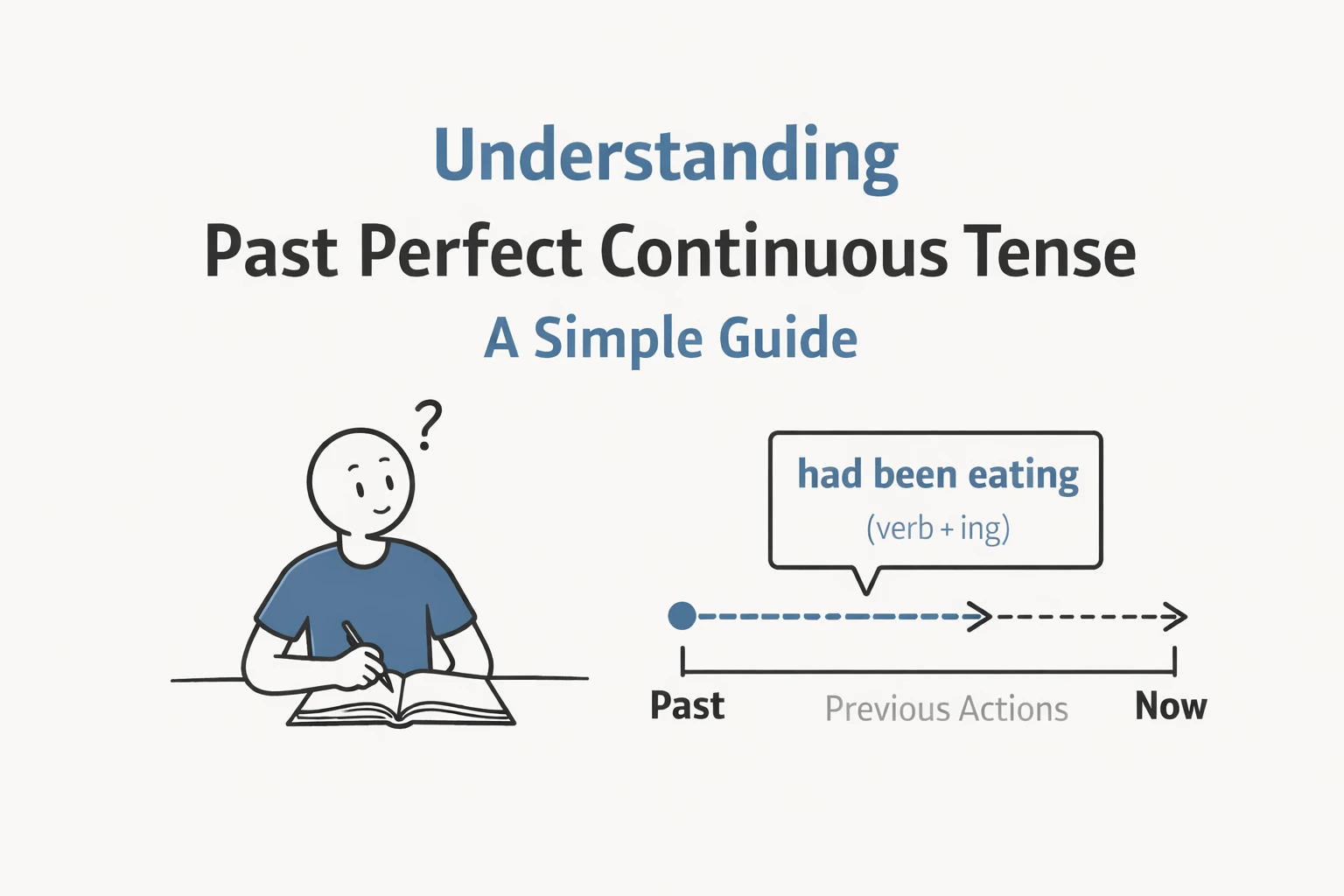
If you’re learning English, mastering the Past Perfect Continuous Tense can be a little tricky at first. But don’t worry! This guide is designed to provide you with the most straightforward explanation, allowing you to start using it correctly.
What Is the Past Perfect Continuous Tense?
The Past Perfect Continuous Tense is used to describe an action that was happening continuously in the past, before another action or event occurred. In simpler terms, it helps you show that something was in progress over a period of time, leading up to another event in the past.
How to Form the Past Perfect Continuous
The formula for the Past Perfect Continuous Tense is:
Subject + had + been + verb (ing)
For example:
- I had been studying for two hours before she arrived.
- She had been working at the company for 5 years when she moved abroad.
Here’s a breakdown:
- had = the past perfect auxiliary verb
- been = the past participle of “be.”
- verb (ing) = the action in progress
When to Use the Past Perfect Continuous
You’ll use this tense in these situations:
- To show a continuous action in the past before another action.
- Example: They had been waiting for hours when the bus finally arrived.
- Explanation: Waiting (the continuous action) happened before the bus arrived.
- To explain the reason for something in the past.
- Example: She was tired because she had been running for an hour.
- Explanation: Running (the continuous action) caused her to feel tired.
- To emphasize the duration of an activity.
- Example: We had been talking for hours before we realized the time.
- Explanation: The focus is on how long the action (talking) was happening.
Examples of the Past Perfect Continuous Tense
Let’s look at more examples to make it clearer:
- I had been reading a book when the phone rang. (An action in progress before another action.)
- She had been practicing the piano every day before the concert. (A continuous action that lasted for a period before another event.)
Negative Form of Past Perfect Continuous
To make the Past Perfect Continuous Tense negative, just add not between had and been:
- I had not been sleeping well before my exam.
- She hadn’t been feeling well for a week before seeing the doctor.
Questions in the Past Perfect Continuous Tense
To form questions, invert the subject and “had”:
- Had you been working when I called?
- Had she been waiting for a long time?
Why Use the Past Perfect Continuous?
This tense helps you:
- Describe what was happening in the past over a period of time.
- Show the relationship between two past events — one happening before the other.
- Explain why something happened or the effect of something that was happening.
Final Tips
- Focus on the duration: The Past Perfect Continuous Tense emphasizes how long an action had been happening before something else in the past.
- Use it to give context: It’s perfect for explaining background information or actions that were ongoing before another event occurred.
With a little practice, the Past Perfect Continuous Tense will soon feel natural, and you’ll be able to describe past events with ease. Keep practicing, and soon this tense will become a tool you can use effortlessly!